Threads of Identity: Botany, Community, And The Living Language Of Rajasthani Textiles
Aparna Munipella | 16 April, 2026
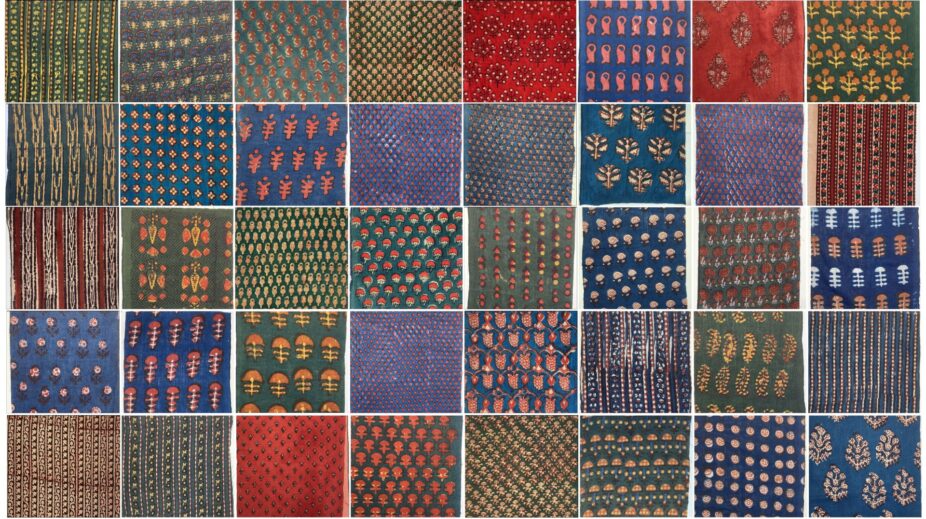
The session began informally – checking slides, confirming visibility – but soon unfolded into a deeply layered conversation with Madan Meena. What seemed like a presentation on textiles gradually revealed itself as an exploration of identity, ecology, history, and the philosophy of design embedded within traditional practices.
Meena opened by reflecting on his recent trip, which he described as a long-planned, purposeful journey rather than a casual visit. He gave two lectures – one at Joshibi University – Tokyo on March 27 and at Calico Bhavan in Nara on April 4, this year.
For over a year, he had intended to meet scholars who had come to India during the 1970s and 80s and had worked extensively on textile traditions at a time when many practices were still alive. Some of these scholars had been professors at universities, and their work included publications and field documentation of now-defunct printing centers.
“If you are working on a revival project,” he explained, “you need data – real data that goes back 80 to 100 years.” What he found was invaluable: these scholars shared their research material openly, gifted books, photographs, textile pieces and even agreed to digitize archives that had never been digitized before, promising to send them in batches. This access to primary material, he emphasized, was crucial to his work.
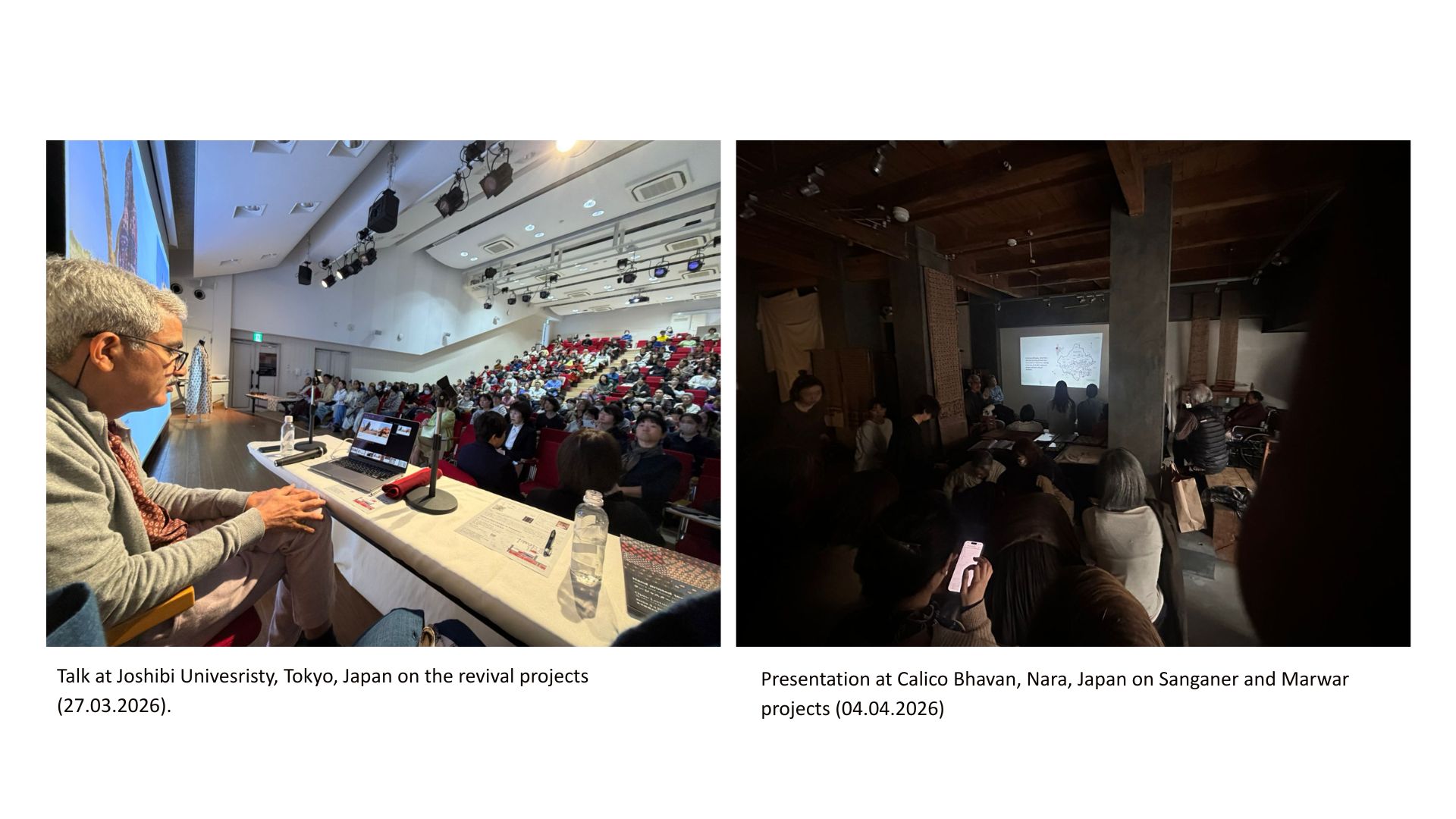
Alongside this academic exchange, Meena encountered an unexpected historical continuity. In Japan, Indian textiles – referred to as Sarasa – have been in use since at least the 8th or 9th century. They are used in kimonos and tea ceremonies, carrying a completely different cultural significance than in India. While examining collections from the Tokyo National Museum, he noted that records explicitly mention the import of these textiles from India centuries ago. Yet, despite this long history of exchange, Japanese scholars largely focused on design, dyeing techniques, and recipes, missing what Meena considered the most critical dimension: the relationship between textiles and community identity. At the request of his colleague Fumi Kobayashi, he focused his talks on precisely this aspect – how textiles are identified by communities and, in turn, how communities are identified through textiles.
To illustrate this, he presented images from the Raika community of Rajasthan, a pastoral group known for camel herding. Two women from this community, both widows, wore entirely different prints. One wore kappa print, from Godwar region paired with a plain deep red odhni – maroon or rusty red, as widows in Rajasthan traditionally do not wear white. The other, from a location just 150 kilometers away in Marwar region, wore rabari-ro-phetiyo. Though both women shared the same community and marital status, their prints differed due to regional variation. This demonstrated a crucial point: textile identity is not only community-specific but also geographically specific.
In another image, three women from the same household were shown together. One was a widow, one a married woman (referred to as suhaagan), and one newly married (beendani). Each wore a distinct print: the married woman wore makoda print, inspired by an insect; the newly married woman wore qatar print, a dagger-shaped motif also used by unmarried women; and the widow wore her designated print. In this context, clothing functions as a visual language – one that communicates status, age, and social position without words.
Moving deeper into the subject, Meena emphasized the role of botany in shaping these designs. Approximately 70–80% of the motifs are derived from flora. He listed numerous examples: gunda, a desert fruit used as a dried vegetable; dhaniya (coriander), also known as makhi in some regions; chameli (jasmine); gulbuta, possibly of Sindhi linguistic origin; nadana, associated with Banjara communities; boria, representing berries from desert shrubs and worn by the Kumhar (potter) community; nimboli, derived from the neem fruit; methi, associated with the Mali (gardener) community; and jardi, inspired by tobacco and worn by Muslim women in desert regions. Not all motifs are botanical – bhalka is inspired by a spear, and qatar by a dagger – but the overwhelming majority originate from plant life.
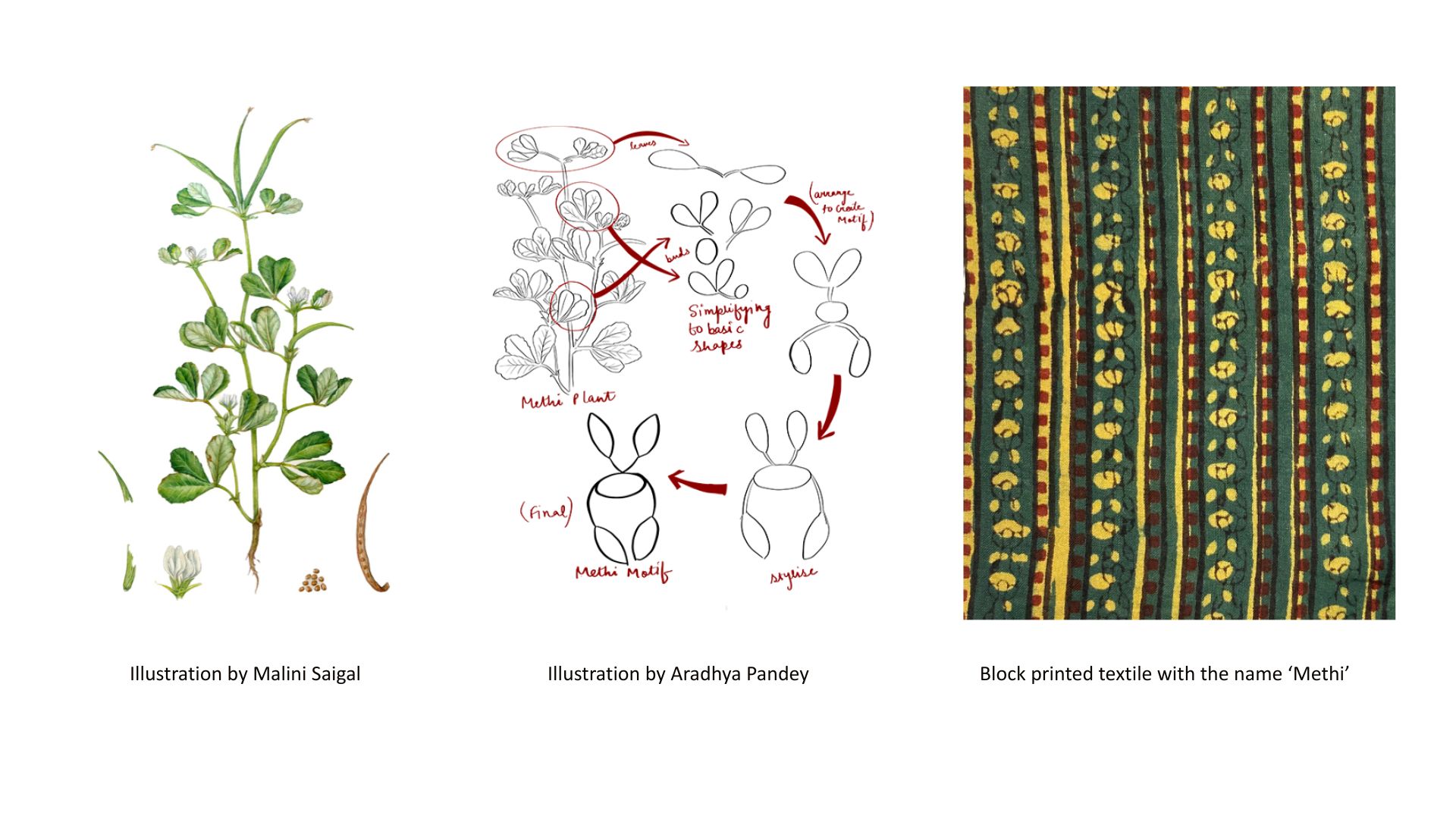
This diversity, he argued, reflects the ecological richness of Rajasthan’s desert landscape. While often perceived as barren, the desert hosts a wide range of plant species that have inspired artisans across generations. These motifs are not merely decorative; they are tied to specific communities, practices, and even regional dialects, as seen in the variation of names across Marwar, Hadoti, Bagru, and other regions.
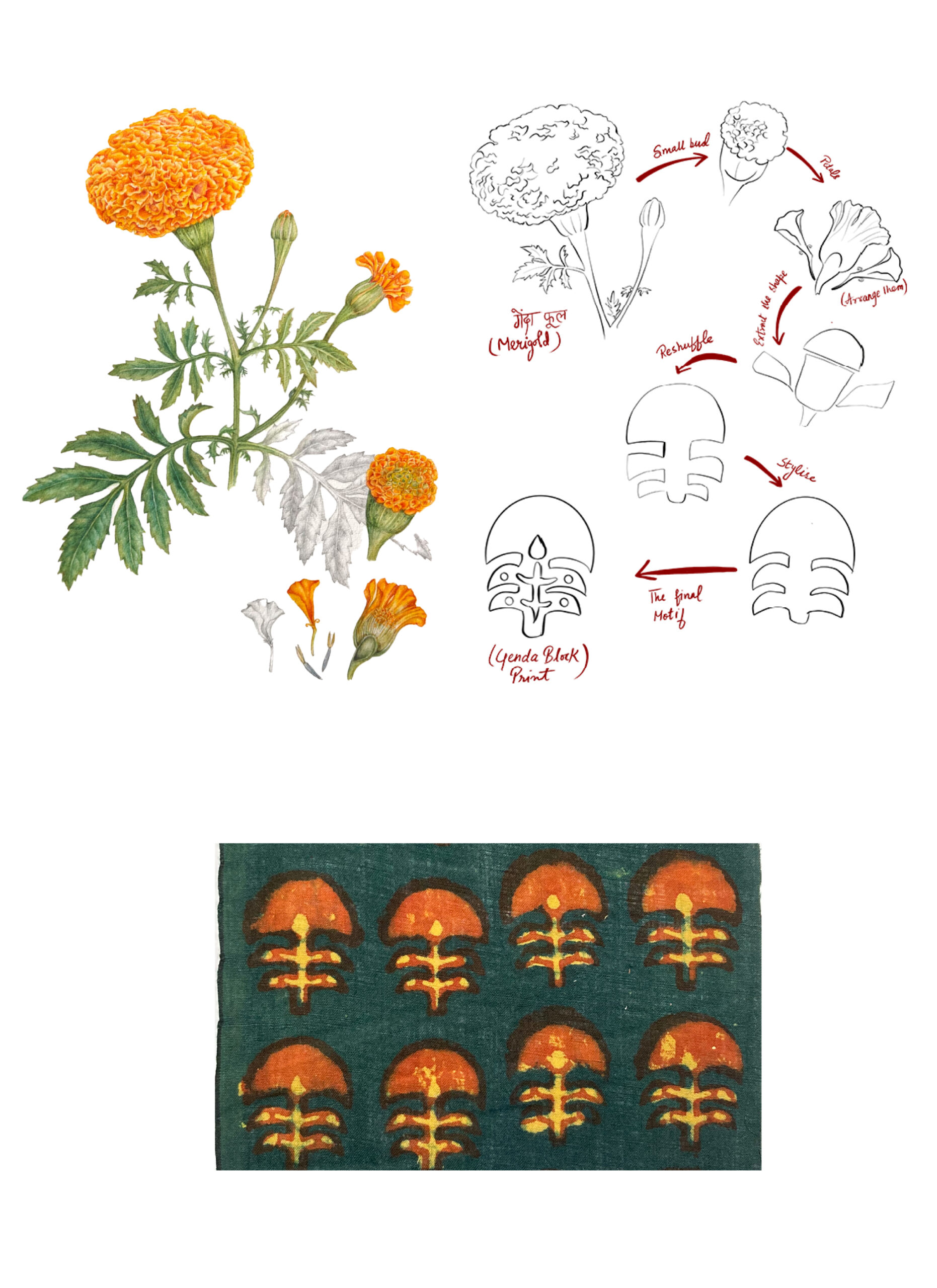
A central focus of Meena’s research is understanding how realistic plant forms are transformed into minimal, repeatable motifs. This process involves significant abstraction. For instance, the akara plant is simplified into a geometric motif suitable for block printing. Similarly, the tobacco plant is reduced to essential elements – leaf, flower, outline, and fill – while maintaining its identity. In another example, a marigold (genda) is first depicted in detail by a miniature artist from Kota, then gradually simplified into a block-print design. These exercises, conducted with students and artists, aim to reconstruct the cognitive process of the block carver.
He stressed that the true designers of these motifs are the block carvers themselves, not external artists or painters. These artisans observe plants, imagine their transformation, and adapt them within the technical constraints of woodblock carving, which requires simplification due to limitations in detail. They also determine pattern repetition, spacing, and color application. This integrated process reflects a sophisticated design sensibility rooted in craft practice.
This approach aligns with a broader characteristic of Indian art: its emphasis on stylization over realism. Meena noted that Indian artistic traditions – from ancient murals like those of Ajanta to miniature paintings of Rajasthan and Pahari schools such as Kangra, Chamba, and Basohli – have rarely pursued photorealistic representation. Instead, they prioritize symbolic and expressive forms. He contrasted this with Western traditions shaped by the Renaissance, where realism became central. In Indian contexts, even detailed miniature paintings retain a degree of flatness and stylization, a principle that extends to block printing.
The concept of repetition is fundamental to design. Meena explained categories such as booti (small repeated motifs), jaal (net-like patterns), and buta (larger motifs). Repetition is not a consequence of environmental scarcity but an intrinsic design principle. However, regional stylistic differences exist: prints from Jaipur and Sanganer tend to be finer and more intricate, while those from Marwar and Kutch are bolder, larger, and more simplified.
To support his research, Meena collaborates with botanical illustrator Malini Saigal, who produces scientifically accurate plant illustrations. However, the high cost per illustration limits the scale of this approach. To address this, he reached out to Henry Noltie, associated with the Royal Botanical Gardens at Kew Gardens (UK), whose recent publication Flora Indica includes historical botanical illustrations created in India during the 19th and 20th century. These illustrations were commissioned during the colonial period, when institutions like the Botanical Survey of India in Calcutta documented plants for their commercial and medicinal value, often employing Indian miniature artists. Through this connection, Meena secured permission to use selected archival illustrations – such as nargis, mirchi (chili), akara, and babool (acacia), singara (water chestnut), darudi (argemone) – in his work, in exchange for providing a copy of his book to the archive.
As the discussion turned to contemporary design practices, Meena raised concerns about the misuse of traditional motifs. He cited instances where designers, including students from institutions in Bangalore, used ritual motifs such as Pithora paintings – associated with Rathwa Adivasi communities – inappropriately in fashion or public spaces, leading to objections and removal. In another case in Japan, a designer repurposed traditional jajam textiles (block-printed floor spreads) into garments, prompting questions about the ethical implications of such transformations. These examples highlight the need for cultural sensitivity and contextual understanding when working with traditional designs.
Finally, Meena addressed the ecological dimension of these textiles. While modern discourse often frames design in terms of environmental statements, he argued that traditional practices already embody ecological consciousness. The diversity of motifs reflects a deep engagement with nature, reinforced by associated songs, folklore, and cultural practices. Historically, textiles were used for extended periods and repurposed when worn out, reflecting sustainable consumption patterns. In contrast, contemporary fast fashion prioritizes novelty and disposability, leading to a loss of both ecological awareness and cultural meaning.
In essence, Meena’s work bridges multiple domains – botany, design, anthropology, and history – to reconstruct a knowledge system embedded in traditional textiles. As he described it, this effort represents “botany through the eyes of artisans,” revealing how communities once observed, interpreted, and lived in harmony with their environment, translating that understanding into patterns that were not only worn but deeply understood.
