When Artisans Reclaim Their Textile Heritage: Exhibition at Kaner Retreat
Aparna Munipella | 19 November, 2026
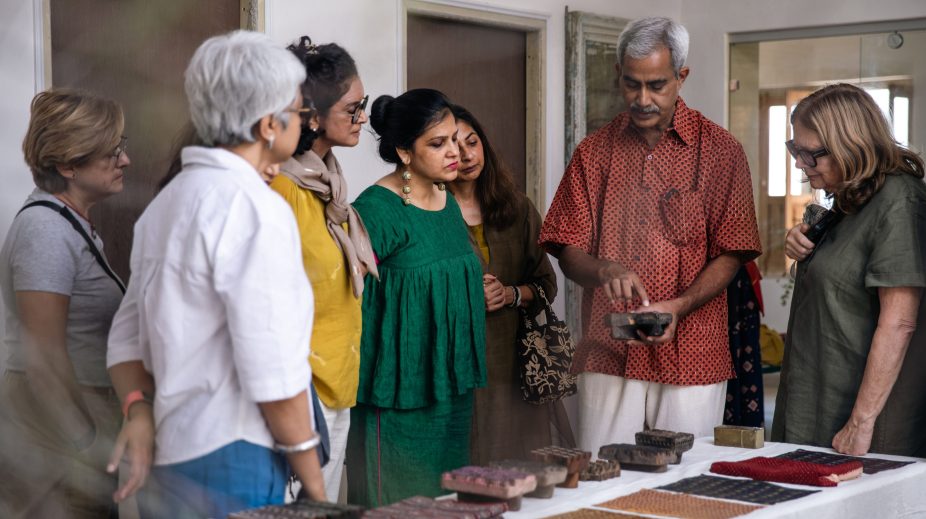
Dr Madan Meena’s ambitious research project is documenting hundreds of forgotten block-print designs from western Rajasthan, tracing their connections across regions and trade routes, and bringing together the artisans, materials and techniques needed to recreate them. What began as a research exercise is now opening up possibilities for craft revival, livelihoods and a new institutional model for sustaining traditional knowledge.
At Kaner Retreat, near Jodhpur, an exhibition of traditional Marwar block prints offered visitors an opportunity to encounter a textile heritage that had largely disappeared from public memory. The exhibition was more than a display of beautiful fabrics and intricate wooden blocks. It brought together the printers, block carvers, researchers and communities whose histories are embedded in these designs. For Dr Madan Meena, the researcher behind the Marwar Block Print Project, the setting was as important as the objects themselves. The prints belonged to this landscape, its ecology and the communities that had created and used them. Taking them to an urban gallery might have displayed the textiles, but it would not have conveyed the same relationship between craft and place. To him, ‘craft had evolved from the land and it expresses well there’.
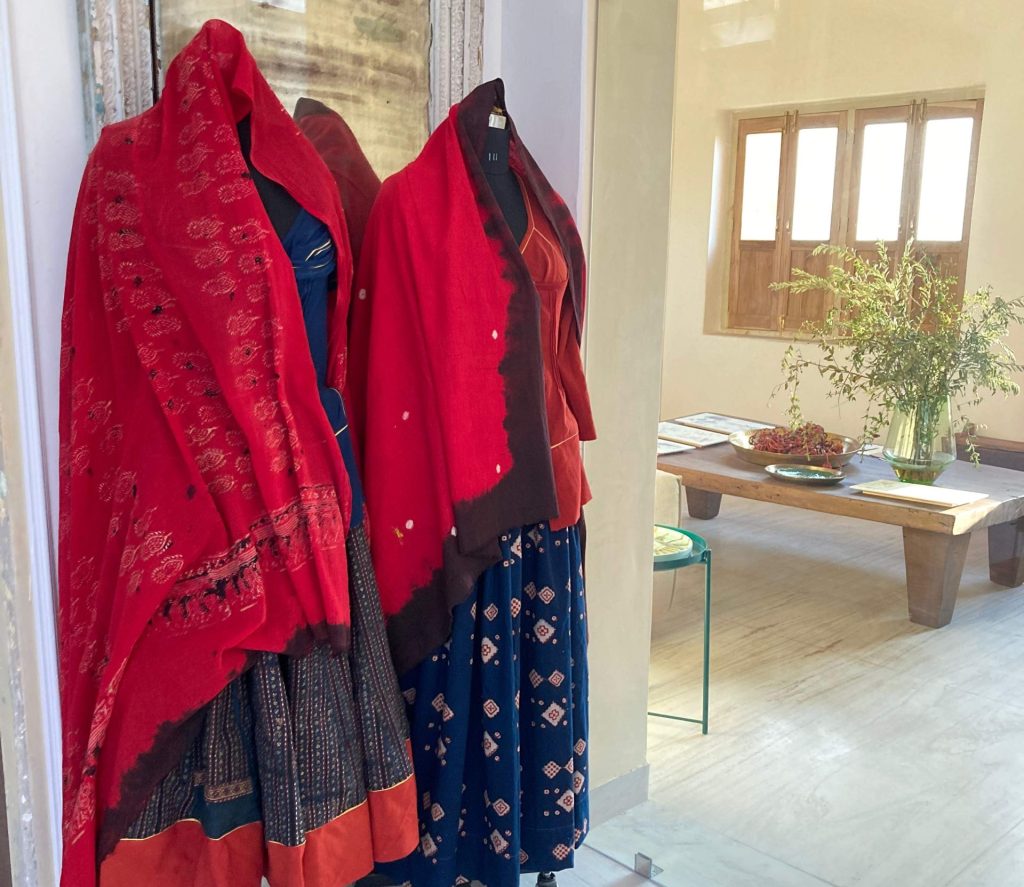
Photographs of the exhibition at Kaner Retreat, courtesy of Burgoyne Original Masters (BOM), who supported the exhibition along with Kaner Retreat.
The project began as an exercise in research, not with a declared ambition to revive an entire tradition. Initial support enabled Meena to investigate the historical prints of Marwar and understand how they had been made. But he soon realised that studying the designs alone would be insufficient. Recreating the textiles was itself an essential part of the research: only by commissioning blocks, working with printers and experimenting with printing techniques could the lost processes be understood. Research gradually led to production, production to revival, and revival to new livelihood opportunities for the artisan families involved.
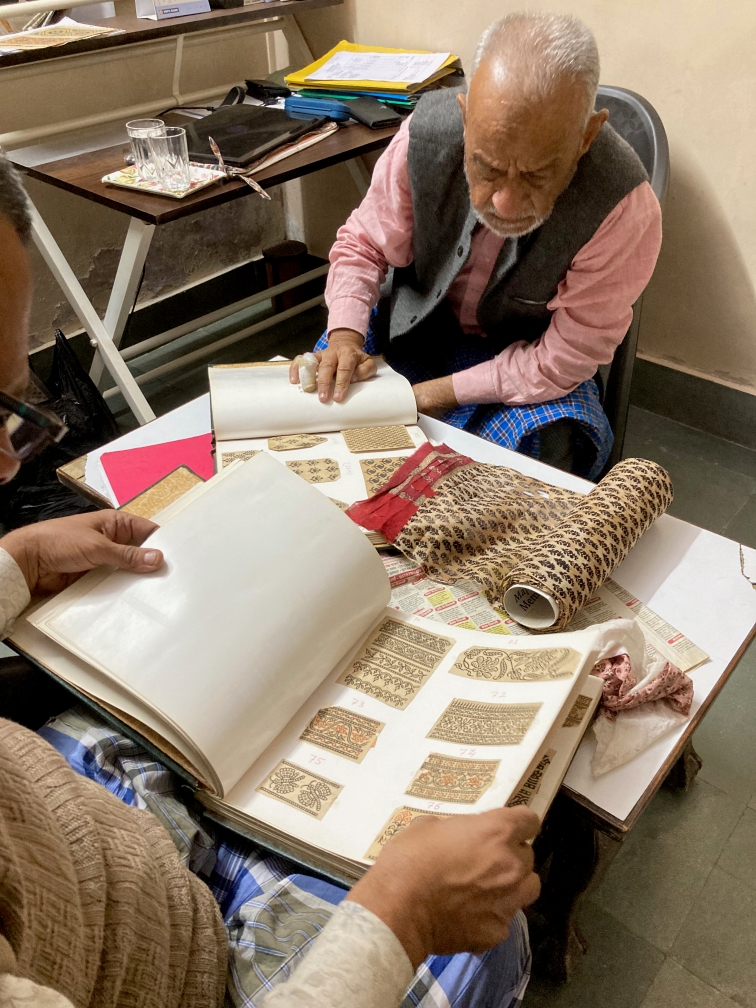
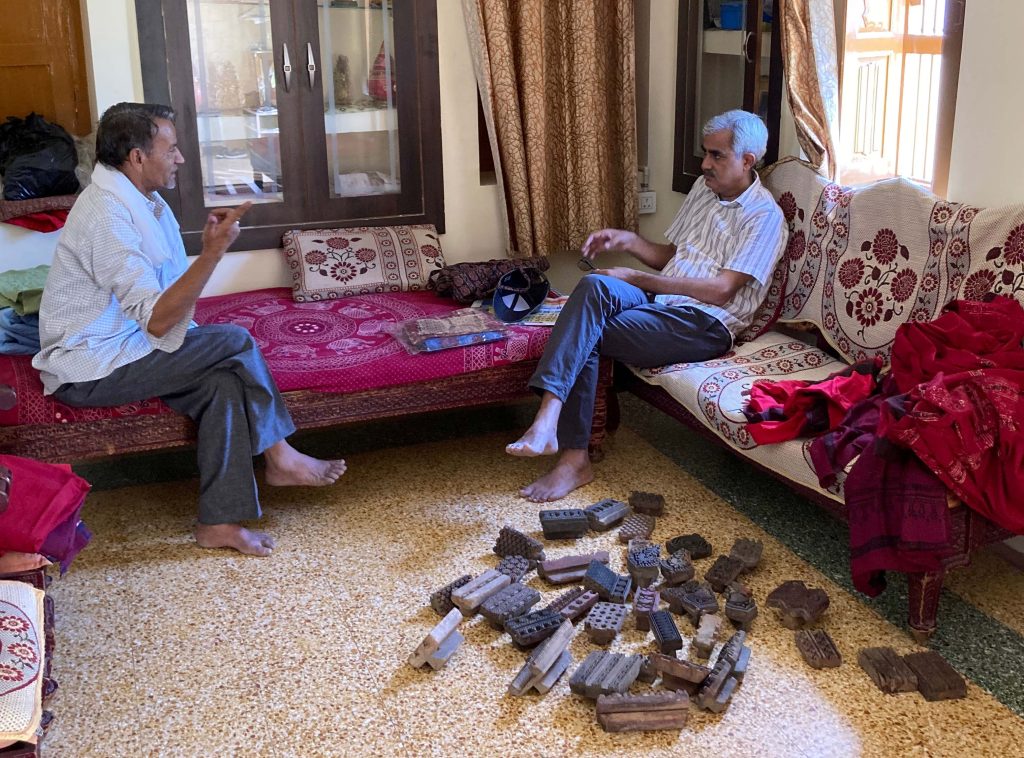
Block carver Mashkur and his father Mohd. Rafiq looking through their design
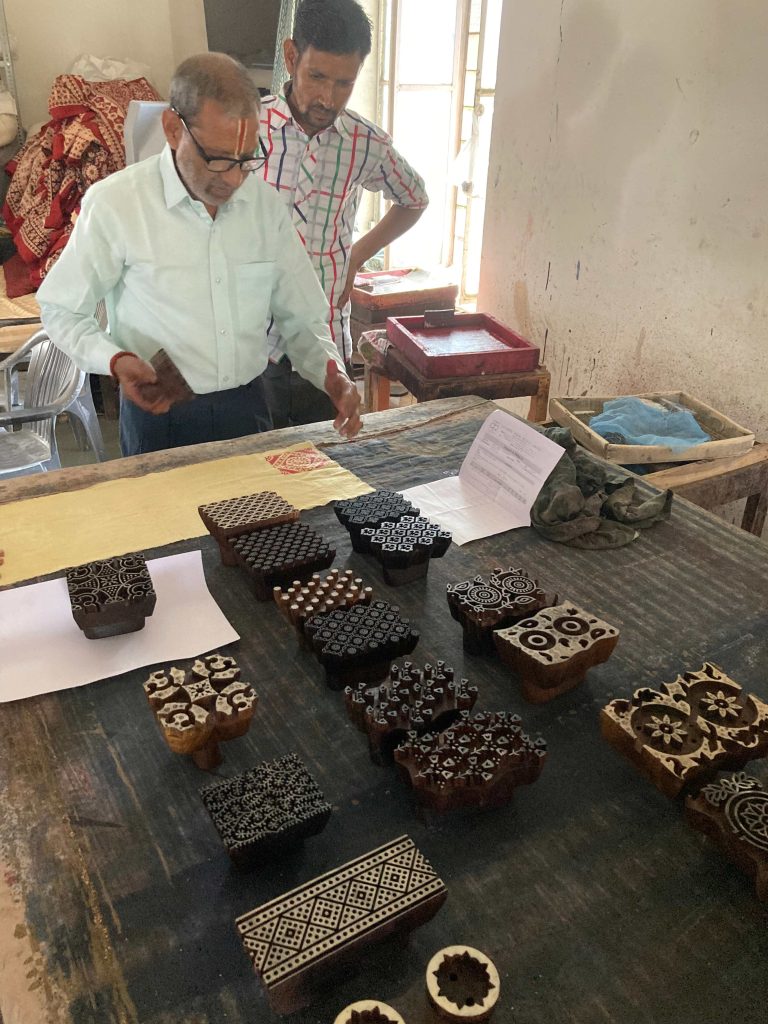
Block Printer Purshottam Chhipa doing sample printing
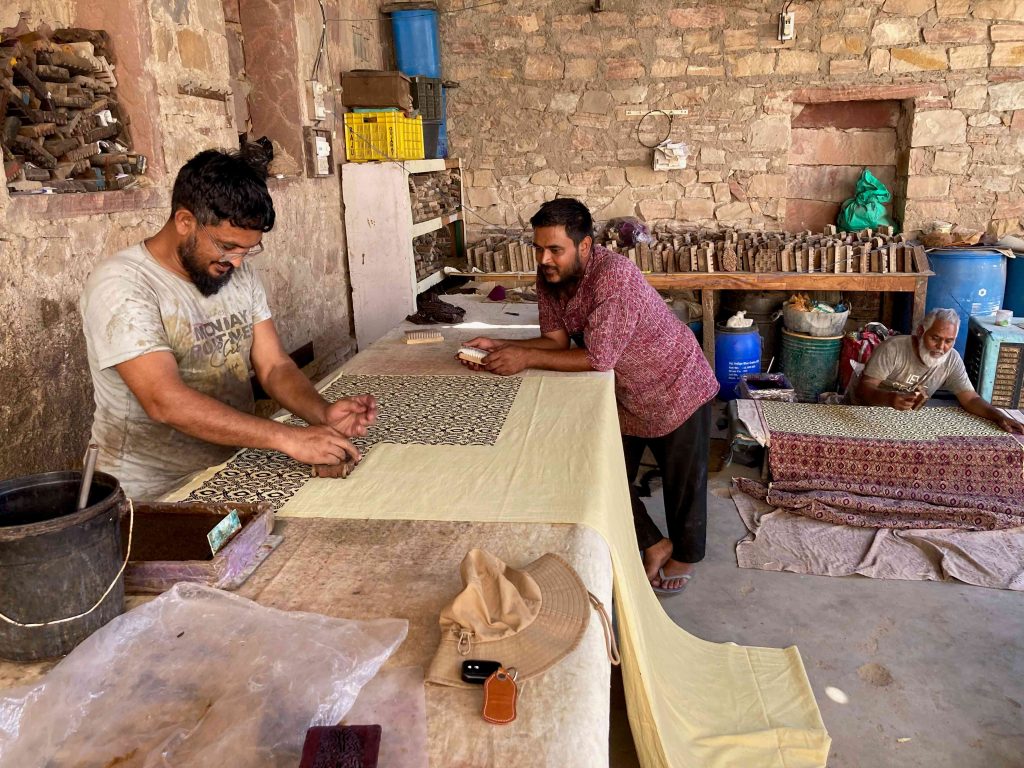
Jamil Chhipa and Ayub Chhipa two young printers from Pipar involved with the project
The scale of the work has expanded considerably. According to the project’s report covering August to November 2026, 847 lost designs have been documented. A total of 434 sets of wooden blocks have been made, including 113 new sets during the reporting period. As many as 305 designs have been printed so far, with each design reproduced on approximately 30 metres of fabric. The project is working with 14 printer families belonging to Chhipa and Khatri lineages, alongside six Multani Kharadi and two Pethapur-Ahmedabad block-carving families. Around 75 antique block-printed textiles have been acquired for study and recreation, and nine fragile pieces have been restored by the INTACH conservation laboratory in Delhi.
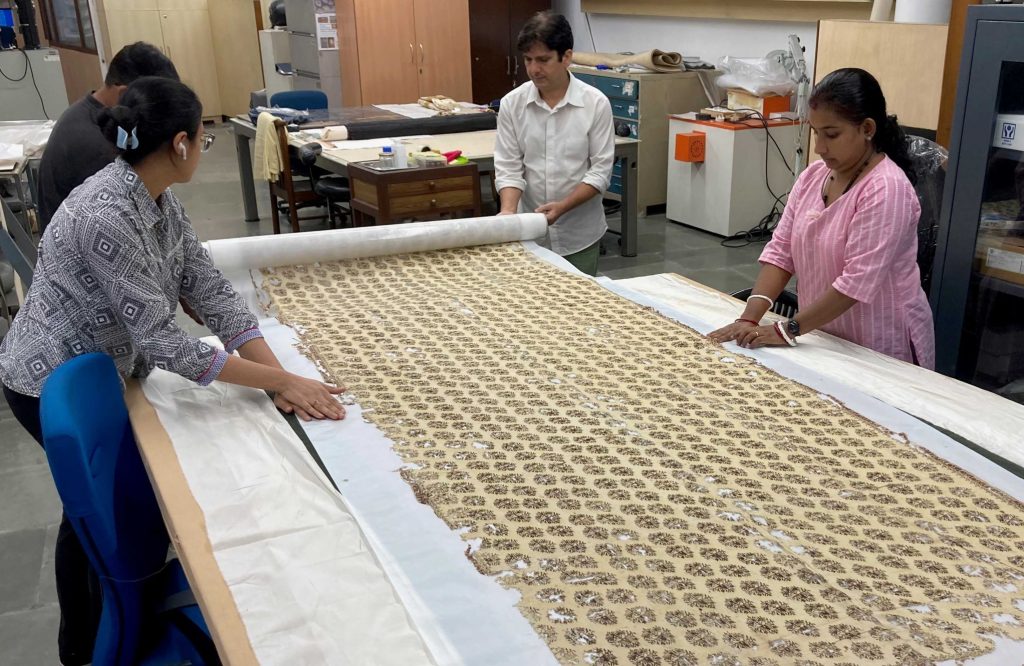
INTACH Conservation Lab restoring some of the textile pieces
These numbers represent only one dimension of the research. The more significant achievement lies in what the recovered blocks and textiles are beginning to reveal about Marwar’s place in India’s wider textile history.
Marwar: A meeting point of textile traditions
Meena estimates that the Marwar region may yield around 1,000 designs. His reasoning is geographical and historical. Marwar was not an isolated centre of production but a junction connecting Sindh to the west, Ahmedabad to the south and Madhya Pradesh to the east. Printing communities moved between these regions, responding to trade, migration, drought and changing patterns of patronage. Their movements carried designs and techniques across geographical boundaries.
The oral histories of artisan families provide important clues. Muslim Khatris who settled in Marwar and later moved to Bagh in Madhya Pradesh continue to recall their origins in Marwar. Hindu Khatris in Barmer and Muslim Chhipas in Marwar and Ahmedabad represent different strands of this interconnected history. During periods of drought, families migrated to market centres such as Sindh and Ahmedabad and returned when conditions improved. Some maintained houses and relationships in several locations. The resulting exchange was not simply a movement of finished textiles; it also involved the movement of artisans, blocks, motifs and printing knowledge.
Meena has found old blocks in the workshops of families across Marwar, including blocks that point to connections with Sindh and other regions. Some blocks made from kikar (Acacia arabica) wood, for instance, suggest a Sindhi connection, since this wood was not traditionally used in the same way in Rajasthan.
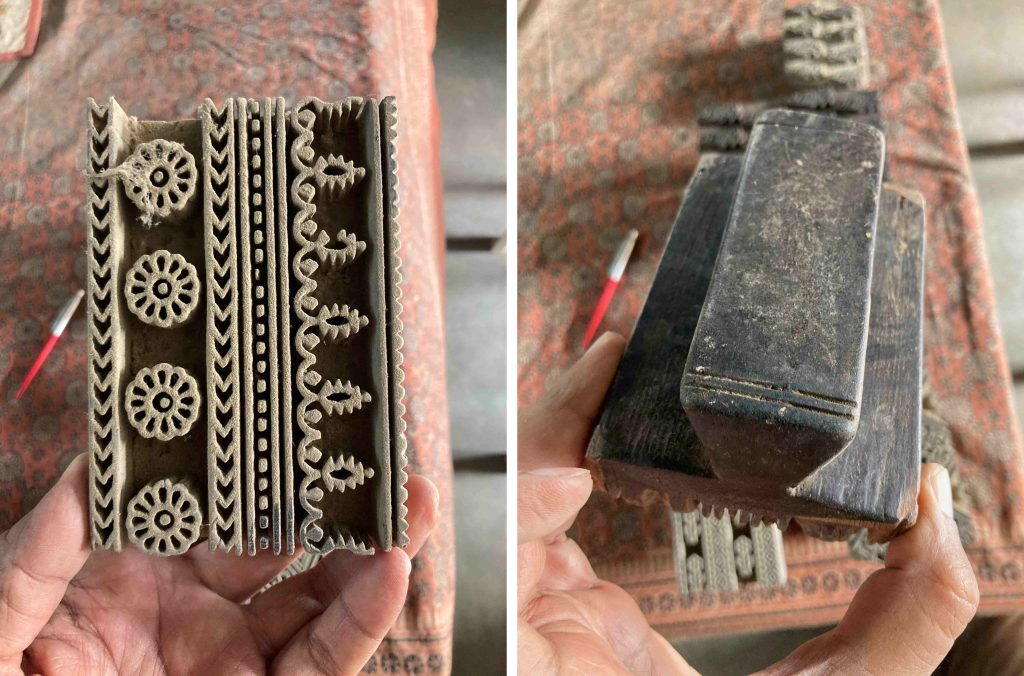
Front and back side of a block from Sindh made with Kikar wood
Blocks from Sindh collected from Khemraj Maheshwari in Barmer (pic by Santosh Maheshwari)
The old records of block carvers in Pethapur, Gujarat, have also yielded designs from Marwar, Madhya Pradesh and Ahmedabad. This has challenged the assumption that Pethapur carvers worked exclusively for Ahmedabad printers. Meena found evidence that they carved blocks for Marwar printers as well, supported by longstanding social and matrimonial relationships between the communities.
The research has also brought to light a repertoire of Saudagari prints associated with textiles produced for overseas trade. These designs are generally linked to Ahmedabad and the export of textiles to Indonesia, including textiles commissioned for ritual use. Yet Meena has discovered corresponding blocks in Marwar, particularly in Pipar and Sojat. This suggests that printers in the region undertook commissioned work connected to Ahmedabad’s trade networks. It also points to Marwar’s participation in a textile economy whose reach extended well beyond western India.
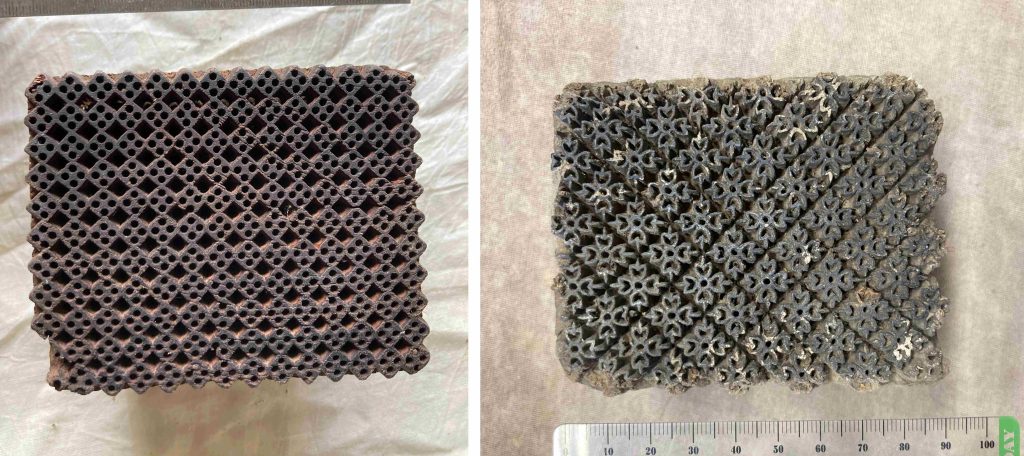
Saudagiri blocks found in Pipar with the Chhipa families
The distinction between local and export designs is central to the project’s selection process. Meena believes that the region’s total repertoire exceeds 1,000 designs, but the project proposes to recreate around 400 prints that were used by local communities. These were not necessarily the same as designs made for overseas markets. Their intended use, visual language and relationship with particular communities help distinguish them.
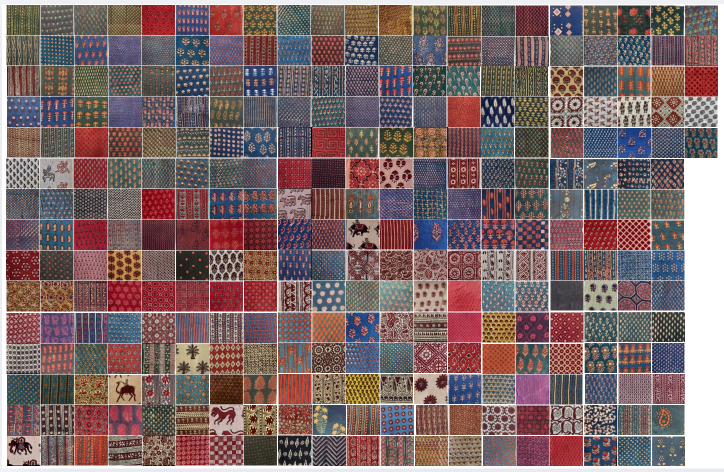
305 prints completed
The local prints served many purposes. They were made into jajams (floor coverings), sirak and patharna textiles, bedcovers, curtains and pardas. They were also used for prayer mats, skirts (pada), turbans, odhani, safas and angochas. Different communities used different textiles for domestic, ritual and everyday purposes. The range of applications suggests that the original repertoire must have been extensive.
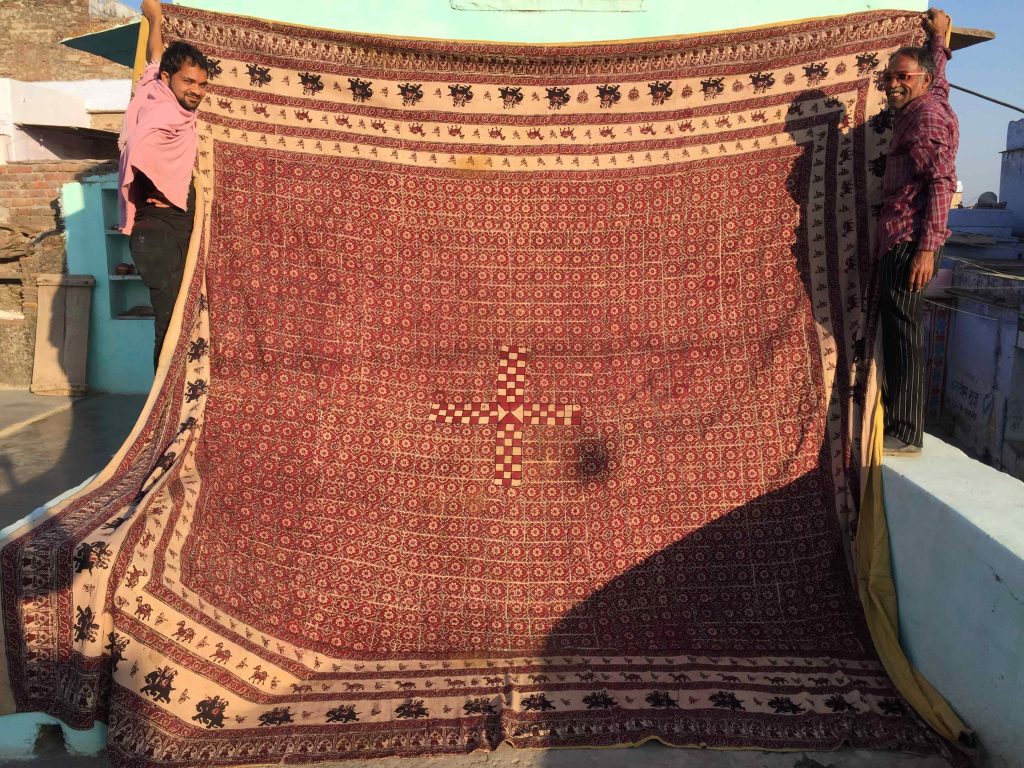
Jajam used as a floor spread to welcome guests
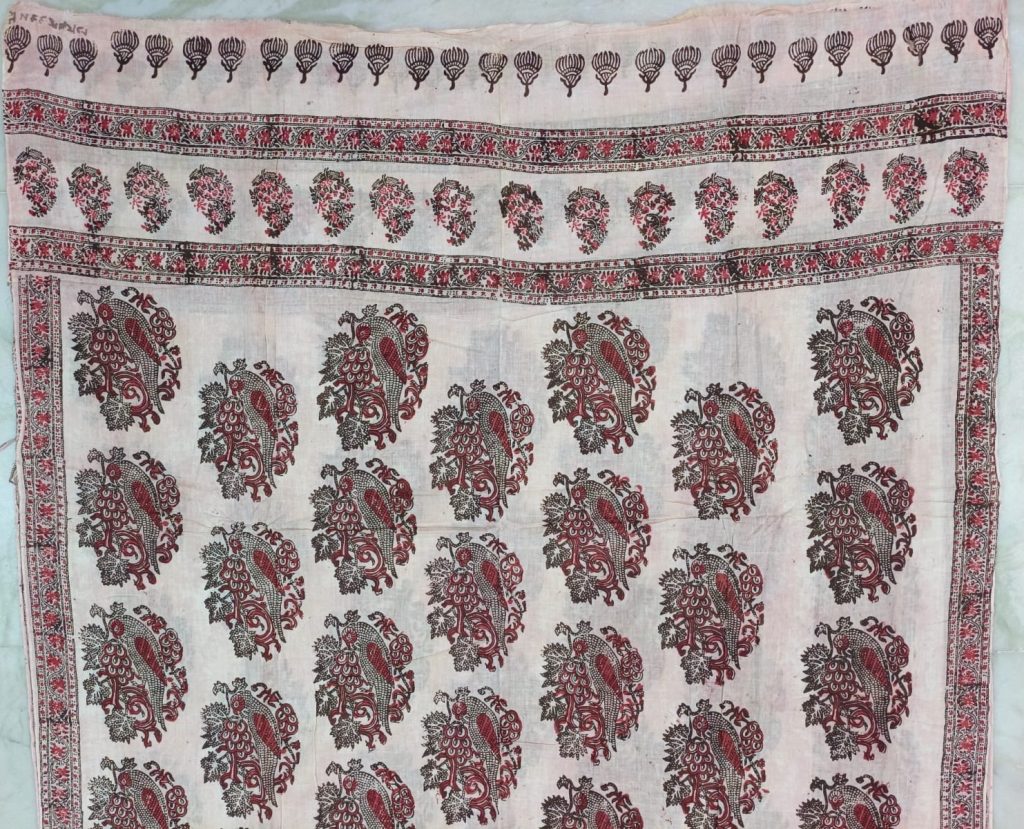
The designs themselves carry a recognisable regional vocabulary. Meena describes Marwar prints as having bold outlines, often with fillers. A typical process could involve a strong outline, a red filler, a mud resist and indigo dyeing. In some designs, the negative spaces were filled using a gadh, or background-filler block. He contrasts this visual language with the finer, more intricate and geometrical designs associated with Ahmedabad and Sanganer. Marwar’s motifs, by comparison, tend to be more abstract and simpler in form, and many have names given to them by the communities that used them. For Meena, this naming is significant: it indicates an intimate relationship between the design and the community, rather than a motif existing merely as a commercial pattern.
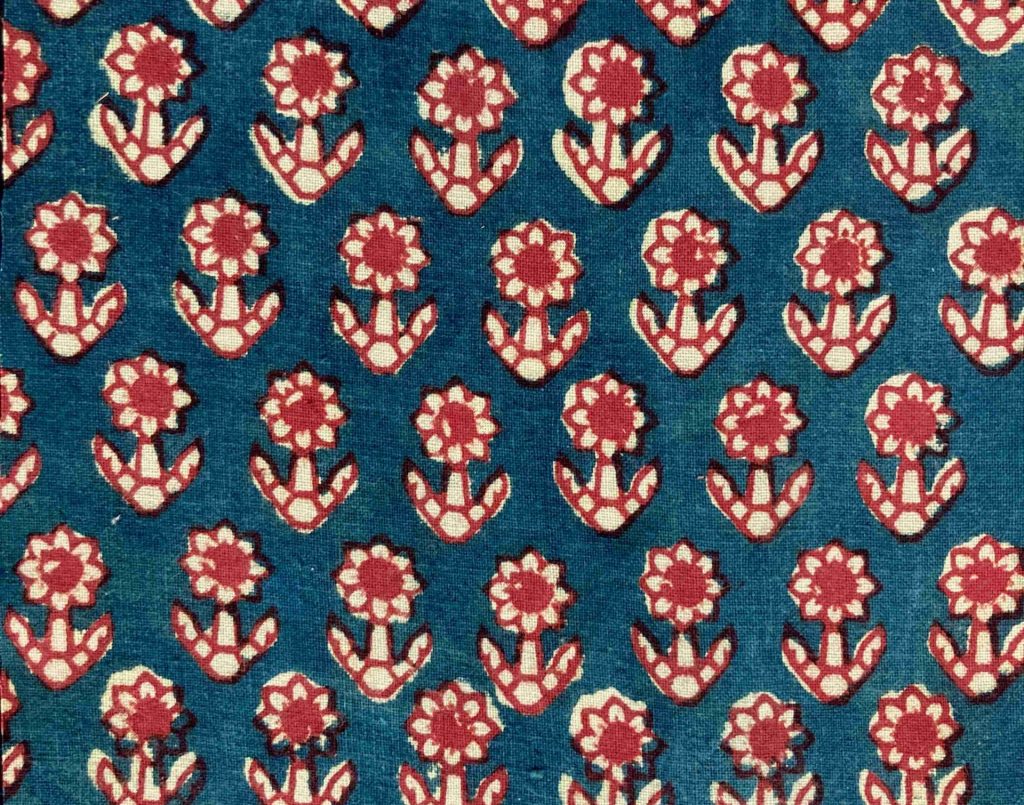
Marwar Block Print design with bold outline
Sanganer block print with fine lines
The project is therefore not attempting to produce a generic collection of traditional prints. It is documenting a particular regional language, its variations, its uses and the communities that gave it meaning.
The exhibition as a meeting with the community
The six-day exhibition at Kaner Retreat brought together printer families from Pipar, Balotra and Barmer. From Pipar, Yasin Chhipa and his nephew Ajruddin, Hazi Mohammad and the family of Ramjan, including Ayub, attended. The Balotra group included Yasin Bai, his son Akbar, Akbar’s cousins and Yasin’s wife. From Barmer, Ranamal Khatri came with a relative. Some families hired taxis and travelled together, with women accompanying them. Their participation was significant. Women have traditionally played an important role in block-printing households, not only in managing the workshop and preparing materials but also in printing. Yet they are seldom visible at urban craft exhibitions. At Kaner, the families could participate in a setting that was familiar to them and speak about their work with confidence. The exhibition thus became an opportunity for the artisans themselves to encounter and take pride in the textile heritage they have helped preserve.
The exhibition was designed around this understanding. Meena chose the location because the prints originated within the wider landscape. A radius of approximately 250 kilometres around Kaner encompasses the geographical area represented by the project’s designs. The surrounding desert ecology, including its flora, is closely connected to the motifs and colours of the textiles.
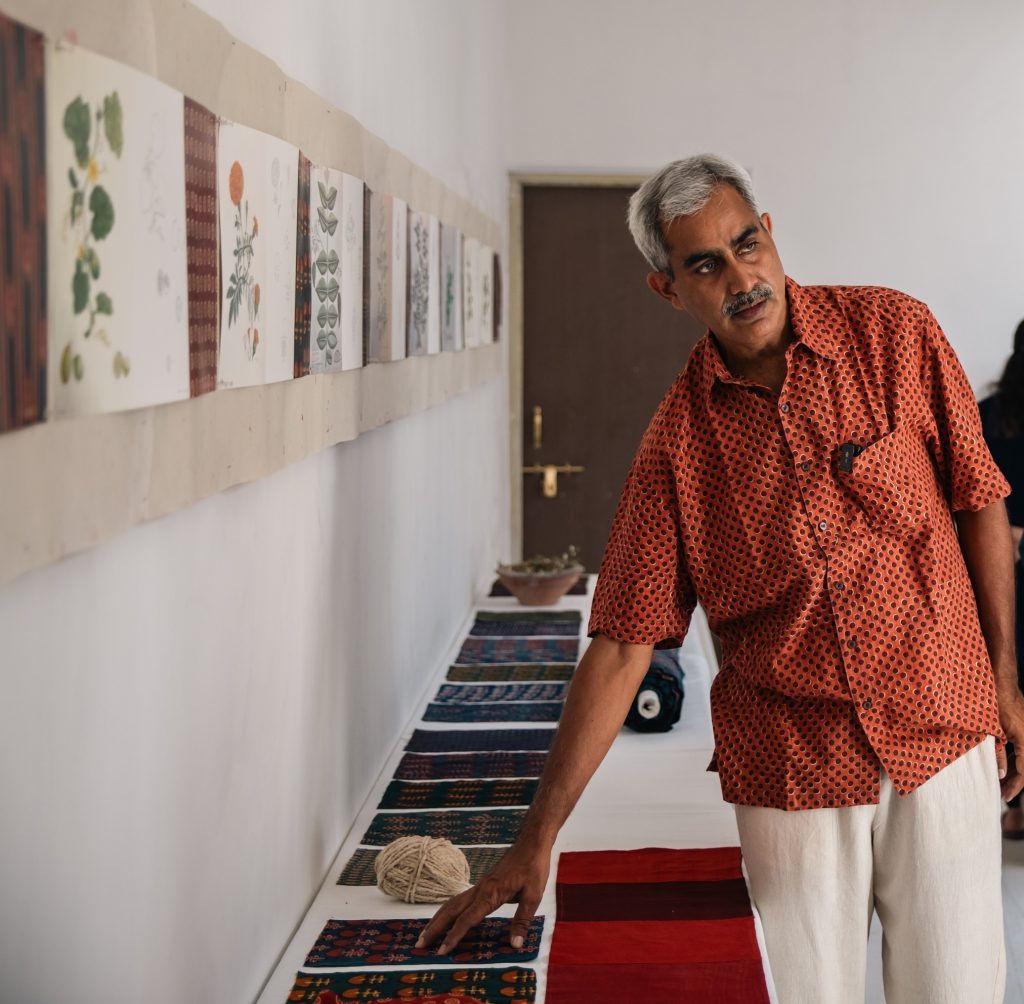
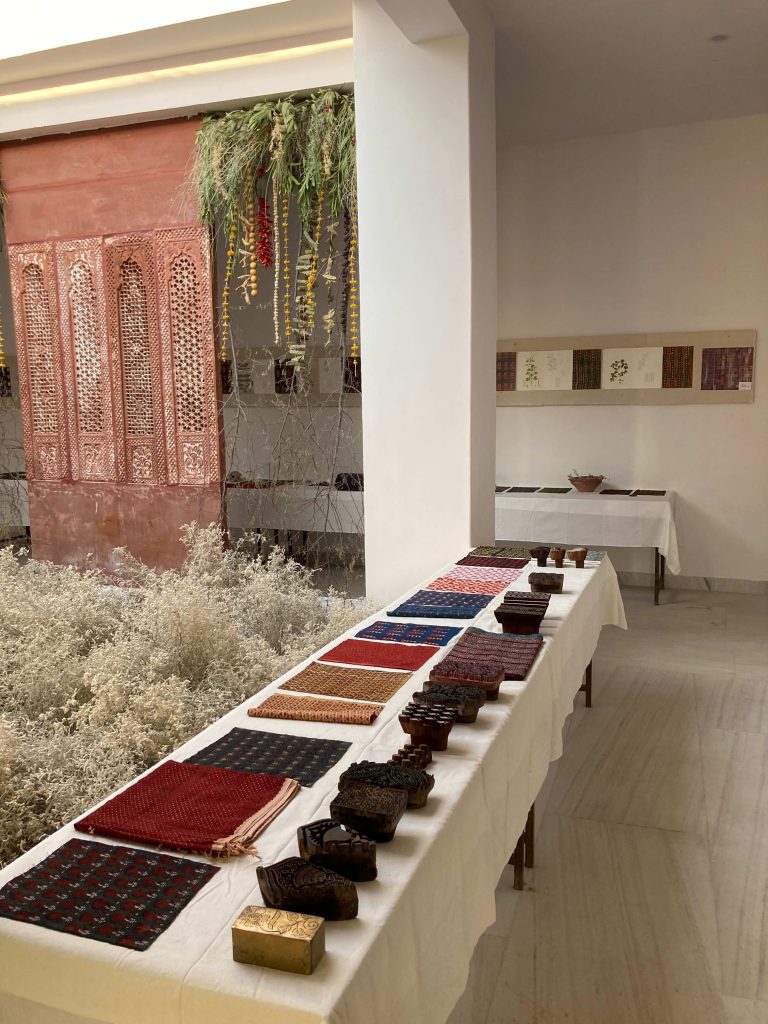
Exhibition at Kaner Retreat
This relationship between place and craft was also explored in Meena’s recent talk at Geoffrey Bawa Space in Colombo, titled Botanical Echoes of the Thar, which examined the desert flora that inspired Marwar’s block prints.
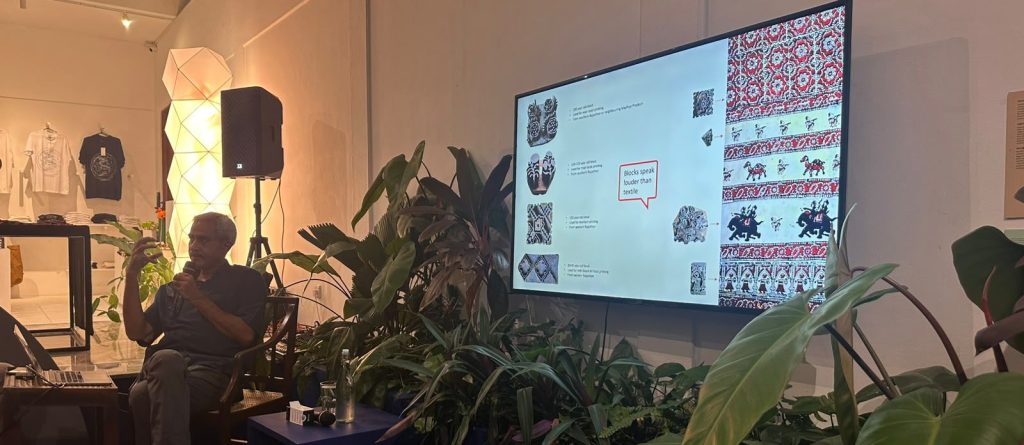
Talk at Geoffrey Bawa Space in Colombo
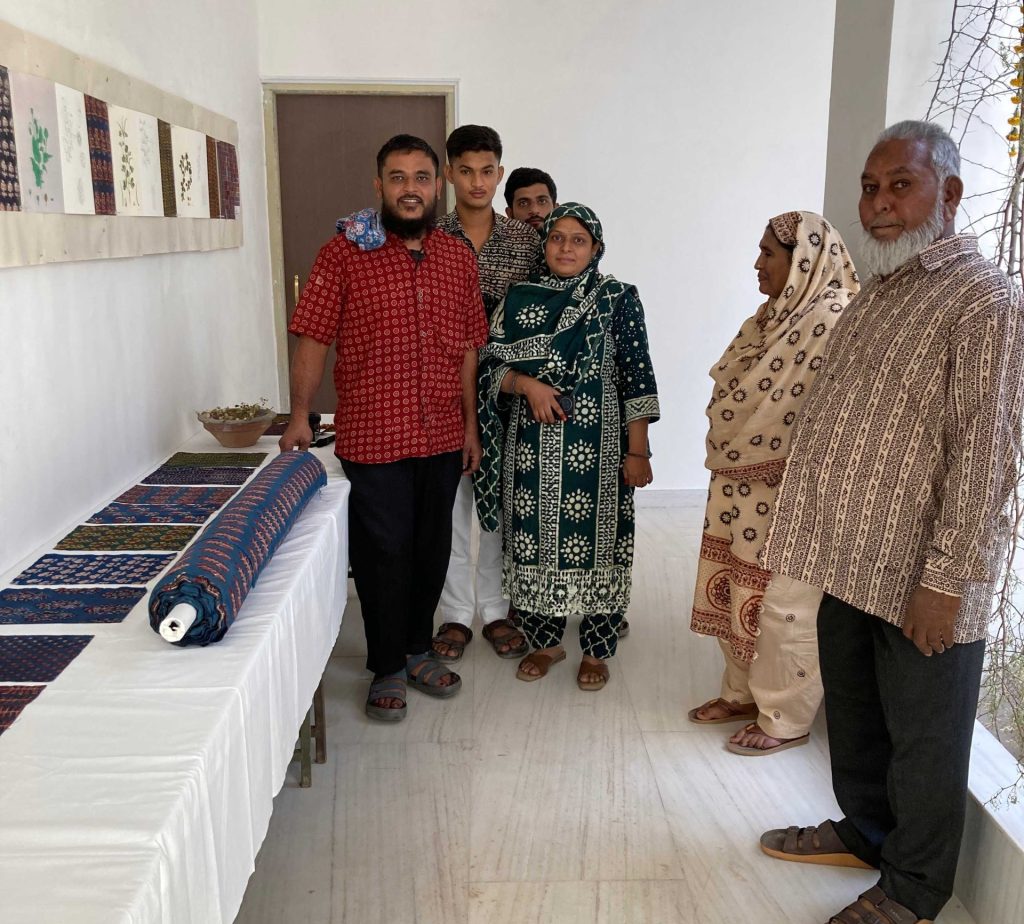
Hazi Mohammad and Ramzan Chhipa family from Pipar at the exhibition
The project works with several printer families in Pipar, Balotra and Barmer, with additional families in the Jaipur region. Meena plans to take the exhibition to Jaipur so that students can encounter the textiles and the people who make them. The Jaipur exhibition is also intended to bring together the printer and block-carving families who could not travel to Kaner. The two settings serve different but complementary purposes: one places the craft within its ecology and community, while the other introduces it to a new generation of designers and practitioners.
The exhibition also brought into focus a part of the craft’s history that is often overlooked: the role of women. Block printing was once a household activity in which family members participated. Women managed water, maintained the cleanliness and organisation of workshops, and undertook printing tasks that required particular skills. Some were accomplished printers in their own right, handling even the outline printing when they had the expertise.
Meena points to Yasin Chhipa of Pipar and Ranamal Khatri of Barmer, both of whom learnt block printing from their mothers. Their mothers were master printers, even though the next generation of men became the recognised masters while their wives did not necessarily continue the same work.
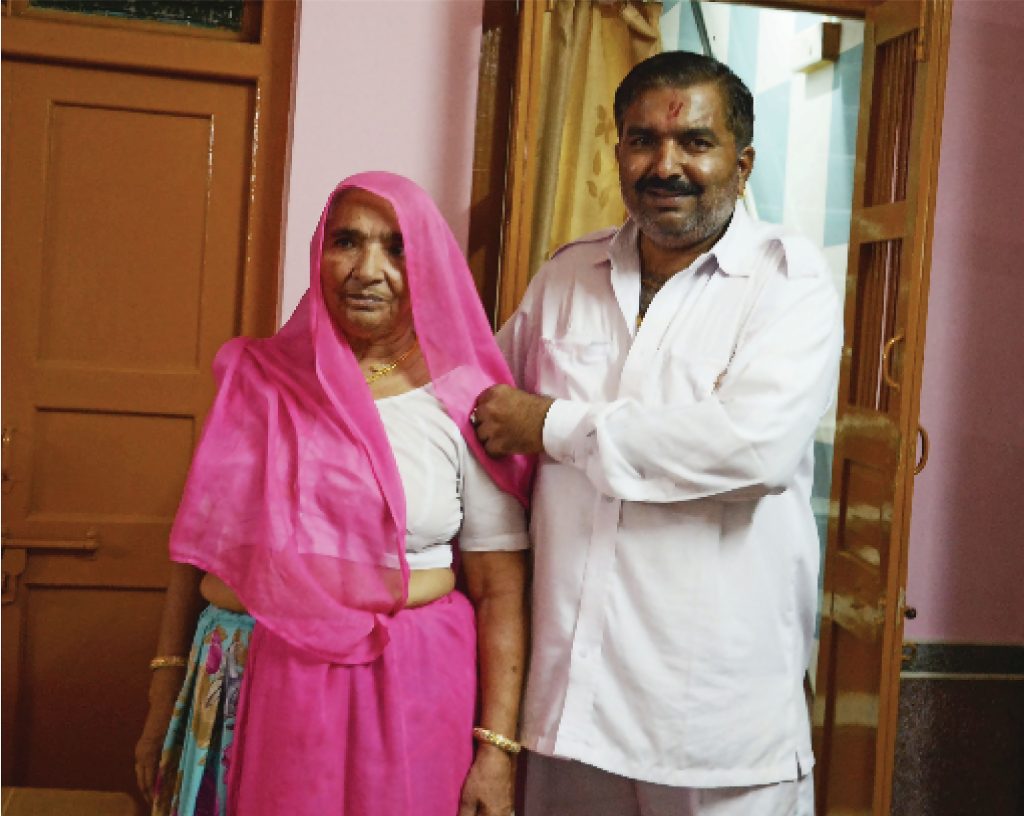
Ranamal with his mother
The increasing industrialisation of block printing has altered this arrangement. Workshops that were once family-based now employ workers from outside the community. In centres such as Sanganer and Ajrakhpur, this change has contributed to the disappearance of women from the printing spaces. The larger commercial units and screen-printing operations are frequently run by non-artisan business communities, while many traditional artisan families continue to work on a smaller scale, producing for brands and larger businesses.
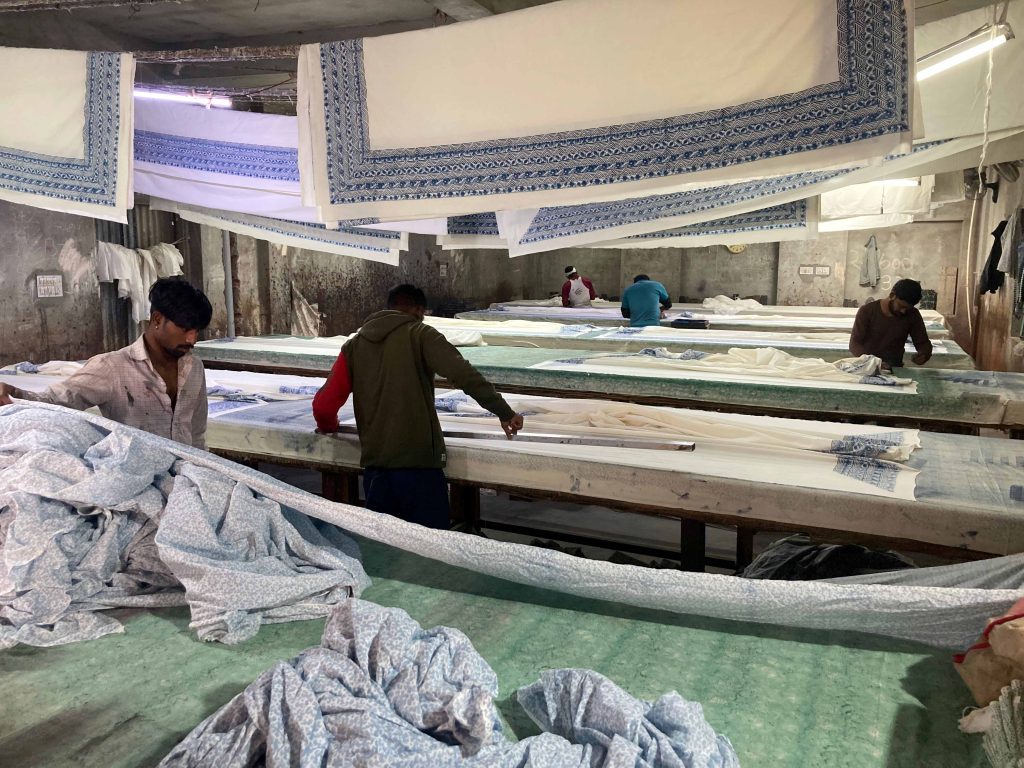
Synthetic dye printing unit in Sanganer
For Meena, documenting the craft must include these social histories. The knowledge does not reside only in a block or a printed textile. It also exists in the people who know how to carve, prepare, print, manage water, maintain the workshop and transmit skills within families.
Recovering the technique, not merely the design
One of the project’s most demanding tasks is recovering the technical knowledge behind historical prints. Meena has been studying textiles dating from the 10th to the 12th centuries in the collection of the Ashmolean Museum at the University of Oxford. He has shared images of these prints with senior Indian printers and block carvers, including experienced practitioners such as Rafiq Sahib, to understand how the blocks may have been constructed and how the textiles could have been produced.
The historical blocks are often more complex than those used in contemporary printing. Some have been recreated, and initial printing attempts have succeeded. However, these experiments have used synthetic dyes (Alizarin). Meena wants the next stage to involve natural dyes and the reconstruction of the original recipes. He is working with master printers to test these techniques and identify the materials needed to reproduce the older processes.
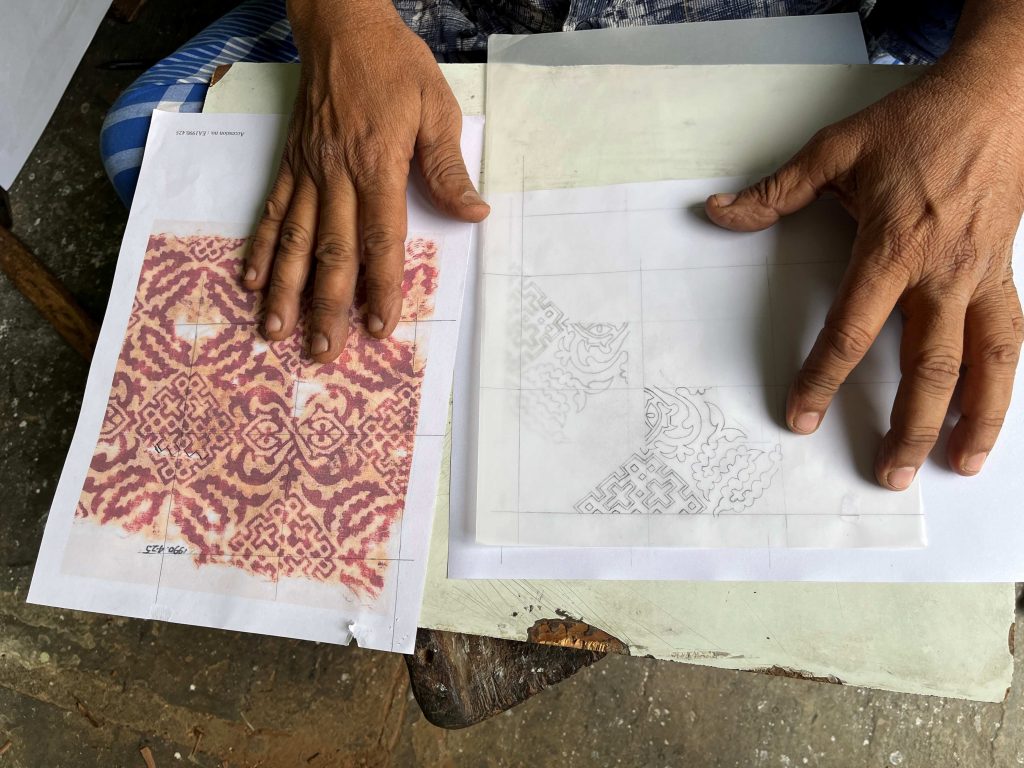
Block of the 11th Century AD Fustat print being recreated
This is a difficult undertaking because the materials and knowledge systems that supported traditional printing have themselves become scarce. Synthetic indigo has largely replaced plant indigo in many printing practices, while synthetic alizarin is commonly used in place of natural red dyes. Traditional sources such as aal (Morinda citrifolia) and majistha (Rubia cordifolia L.) have become less accessible. Meena is therefore exploring the cultivation of natural dye plants on a small farm, with the possibility of developing a more dependable source of raw material. Historical records indicate that around his native village in Rajasthan some dye plants were cultivated commercially, with a cycle of harvesting and replanting.
The wood used for block carving presents another challenge. Meena is particularly concerned about the loss of knowledge associated with Gurjan (Dipterocarpus turbinatus) wood, which was used in Jaipur, Tonk and Sawai Madhopur for fine block carving. The wood requires specialised tools, which are not interchangeable with those used for teak or rosewood. Very few carvers today retain the skill of working with it. Meena is exploring the possibility of obtaining saplings and encouraging cultivation so that future generations of block carvers have access to the appropriate material and can continue the specialised practice.
The research also extends to other printing centres. Meena keeps travelling to Pedana and Pollavaram in Andhra Pradesh to study Kalamkari block-carving techniques and printing recipes. The quarterly report records his visits to Kutch and Ahmedabad as well, where he has been examining related designs and seeking comparative material. Two veteran block carvers from Pethapur, near Gandhinagar, have recently joined the project.
The objective is not to standardise these traditions into one method. It is to understand the differences between them and recover the specific technical knowledge that shaped each regional practice.
Natural materials, water and the future of craft
The question of sustainability is integral to Meena’s thinking. He is critical of the way many traditional printing centres have shifted towards screen printing and synthetic dyes without developing adequate systems for water use and waste treatment. Sanganer, for instance, has a Geographical Indication (GI) associated with its natural-dye block-printing tradition. Yet, according to Meena, much of the production there has moved towards screen printing, while even a portion of the remaining block printing uses synthetic dyes. This raises a fundamental question about the relationship between a GI designation and the actual practice of the craft it is intended to represent.
The environmental consequences are equally serious. Printing requires substantial water, and the water used must be suitable for the process. Its pH and quality may need to be tested and treated before use. The wastewater must also be treated rather than released untreated into drains and water bodies. Meena believes that a properly organised printing centre should demonstrate these practices and become a model for the wider industry.
His proposed institution for artisans would therefore be more than a training facility or a production unit. It would provide a controlled environment in which complex printing techniques could be tested, water could be managed responsibly, and artisans could experiment with historical recipes and designs. It would also function as a residency, allowing printers and other craft practitioners to come together, learn, develop and carry the knowledge forward.
Meena has approached his parent organization the Kota Heritage Society to help identify land that could be leased for 20 years. The institution would be intended primarily for artisans, not as an external body that simply teaches them a prescribed method. The practitioners themselves would experiment, address technical challenges and develop solutions.
An equally important principle is that the knowledge gathered through the project should become part of the commons. Meena does not want it confined to a library, museum or academic institution, where access may be limited. The material should remain available to the communities and printers who can use it. A printer wishing to reproduce a particular design should be able to access the relevant documentation, understand the process and continue the work.
He is aware of concerns about intellectual property and the appropriation of traditional knowledge, particularly as international institutions and fashion initiatives seek to acquire craft skills. He has been approached in connection with a proposed craft-training initiative by Qatar Museum. His position is that knowledge must be shared if it is to survive, while the specific identities of protected craft traditions and their geographical associations must be respected. Learning a technique need not mean reproducing another community’s GI-protected designs; practitioners can develop their own visual languages while learning from established methods.
For Meena, the larger danger is that knowledge will disappear if it is withheld from future generations. The answer lies in creating more opportunities for people to practise the crafts, while ensuring that the communities that have sustained them remain recognised and economically viable.
The challenge of restoring lost textiles
The revival of fine muslin offers another illustration of the relationship between material, skill and patience. Meena argues that the disappearance of fine muslin cannot be addressed simply by introducing new machinery or technology. The quality of the cotton fibre itself is fundamental. Fine spinning requires fine, long-staple cotton, and the indigenous varieties once used for this purpose are no longer readily available. Short-staple cotton cannot produce the same fine yarn.
Traditional spinning also depended on environmental conditions. The work was undertaken very early in the morning, when moisture in the air made it possible to spin the fine fibre. Spinning had to stop as the day warmed and the humidity changed. Production was necessarily limited. The cloth was rare, and patrons paid for its exceptional quality.
Meena is working with a family near Calcutta that continues to produce 300-400 Khadi count muslin using traditional methods. Even with its inherited knowledge, the family can produce only about two thaan, or approximately 22 metres, in a month. This makes large-scale commercial production unrealistic. Meena plans to accumulate the cloth over a period of time for use in the Sanganer project.
The example also raises questions about the contemporary fashion market. Brands often want large quantities, quick delivery and lower prices. Such expectations can force spinners and weavers to compromise on quality. Excessive bargaining and the presence of middlemen further reduce the returns to the people doing the skilled work. Meena believes that brands must invest in field research, identify the families that retain the knowledge and build long-term relationships with them. Financial support alone cannot recreate the traditional relationship between patron and artisan that once sustained quality.
Following the textile routes beyond India
The project’s research is increasingly international. Exchanges with Japanese scholars have continued through Fumie Kobayashi of Calico India. Yuriko Nishioka and Hiroko Iwatate have shared photographs of blocks and documentation of textiles they collected in Rajasthan since the 1980s. Apart from dealers in India, old block-printed textile samples are also been sourced from Sarasa in Tokyo and Molly Hogg in the United Kingdom.
Meena’s visit to Sri Lanka opened another line of inquiry. Historical records indicate that Indonesian textiles travelled through Sri Lankan ports and were carried further west, including towards Africa. He visited museums and private collections to look for surviving examples. Sri Lanka’s humid climate, however, makes the preservation of old textiles difficult. Rajasthan’s dry conditions have allowed some textiles to survive for as long as 300 years in family homes, havelis and palaces.
He found evidence of Indian textile influence in Sri Lanka as well. Photographs show Sri Lankan tribal communities wearing block-printed textiles associated with Madhya Pradesh. Meena is interested in how these textiles reached the island and how they were used. He also observed references to Sanganer prints in a Sri Lankan folk museum collection. A comparison with preserved designs helped him identify the textile as a relatively modern print rather than an ancient local tradition. He believes that further research into sea trade and historical records will help establish these connections more clearly.
His observations extended beyond the textiles themselves to the materials used in Sri Lankan dyeing. He identified references to natural dyes, including red used in traditional flags, and indigo. He also collected a botanical sample for identification by a botanist at the Botanical Survey of India. These observations are preliminary research leads, but they demonstrate how the study of a textile can open questions about trade, plants, pigments and the movement of material knowledge.
The next stage of the international research includes a proposed visit to Turkey in March or April 2027, following an online meeting with Veliye Martı of Istanbul, who has agreed to introduce Meena to her studio’s printing traditions. Connections are also being explored with the last block-printing workshops in Isfahan, Iran, and the Haveli Museum in Lahore for research relating to Sindh. The project has also attracted interest from the Max Planck Institute in Germany, the Max Planck–NTU Centre for Biocultural Worlding in Singapore. Meena is also interested in travelling to Indonesia to investigate the historical trade in Indian textiles.
Giving the prints a contemporary future
For Meena, the recovery of designs and techniques will have limited value if the textiles remain confined to archives and books. The communities that once used these prints have largely moved away from them, and contemporary designers need to understand how the textiles can be used without stripping them of their history. One of his students Rishita Jain has joined to project to develop new garments through informed engagement with the material.
Jain has since been appointed as a full-time research assistant to support the project’s documentation and the creation of a library of traditional costume patterns. The library is intended to be material and practical, not merely a collection of illustrations. It will include paper patterns, drawings and details of how garments were cut, stitched and worn. Traditional tailors are being engaged to recreate the garments so that the patterns can be used by future practitioners.
The research also records differences in garment construction. Historical skirts and blouses were hand-stitched, and families generally owned only one or two pairs. These were not mass-produced garments. The Marwar project will use machine stitching where it is historically appropriate, since sewing machines had entered village life several decades ago. The separate Sanganer costume project, however, is recreating hand-stitched garments.
One particularly demanding reconstruction is that of the choga, a garment worn by royal families. A master tailor named Suresh Kumar Manohar, who comes from a traditional tailoring community and works with the fashion department of the Indian Institute of Crafts and Design, has spent a year on the reconstruction. The garment’s complex pleating and construction require considerable time and skill. The project is also developing other hand-stitched costumes to demonstrate the technical sophistication of traditional tailoring. The intention is to encourage a new generation of designers to work with traditional material in a way that is informed, responsible and commercially viable.
Sanganer and the unfinished work of revival
The Sanganer project continues alongside the Marwar research. Its immediate challenge is the shortage of practitioners able to carry forward the older printing techniques. The last printer who had been practising the particular process is now unable to stand for long because of health problems. Meena is looking for younger printers in Jaipur who can take up the work.
One prospective printer has the necessary skills and a suitable space for sun bleaching, a process in which the cloth is spread on sand and sprinkled with water. His father also retains knowledge of the fine blocks used in the earlier practice. Another family has expressed willingness to participate if funding can be secured. The project has so far produced around 18 pieces, reviving more than 100 year old three-metre angochas printed with specific patterns. The objective is to revive the garments and their production, not simply to document them in a book.
The museum dimension is another distinct part of the work. Ten collections of products developed for Sanganer are intended for museums. The blocks continue to be commissioned and made, but this is a self-funded undertaking, and production proceeds as resources become available.
The Marwar project, meanwhile, is supported by renewed grants from INDICA’s Center for Embodied Knowledge, Samgata and Neo Foods. The quarterly report records that 105 fresh textile pieces were produced in two and a half months during a period when poor monsoon conditions in Rajasthan and Gujarat allowed printing to continue without interruption. The report also records the acquisition of additional fabric from a supplier in Bengal, reflecting the difficulty of securing adequate supplies of suitable handspun and handwoven cloth.
A material and visual archive is being built alongside the printing work. The project has acquired storage space in Jaipur for printed textiles, while blocks and vintage textile pieces are also being preserved. Rishita Jain is organising the documentation, with designs, families and locations catalogued systematically. A geographical map of the region is already available, and the plan is to connect the blocks and textile samples to the places and families from which they were collected. A prototype for the binding of a multi-volume publication, designed by Aditi Babel of ‘Atelier ab’, was also displayed at the Kaner exhibition.
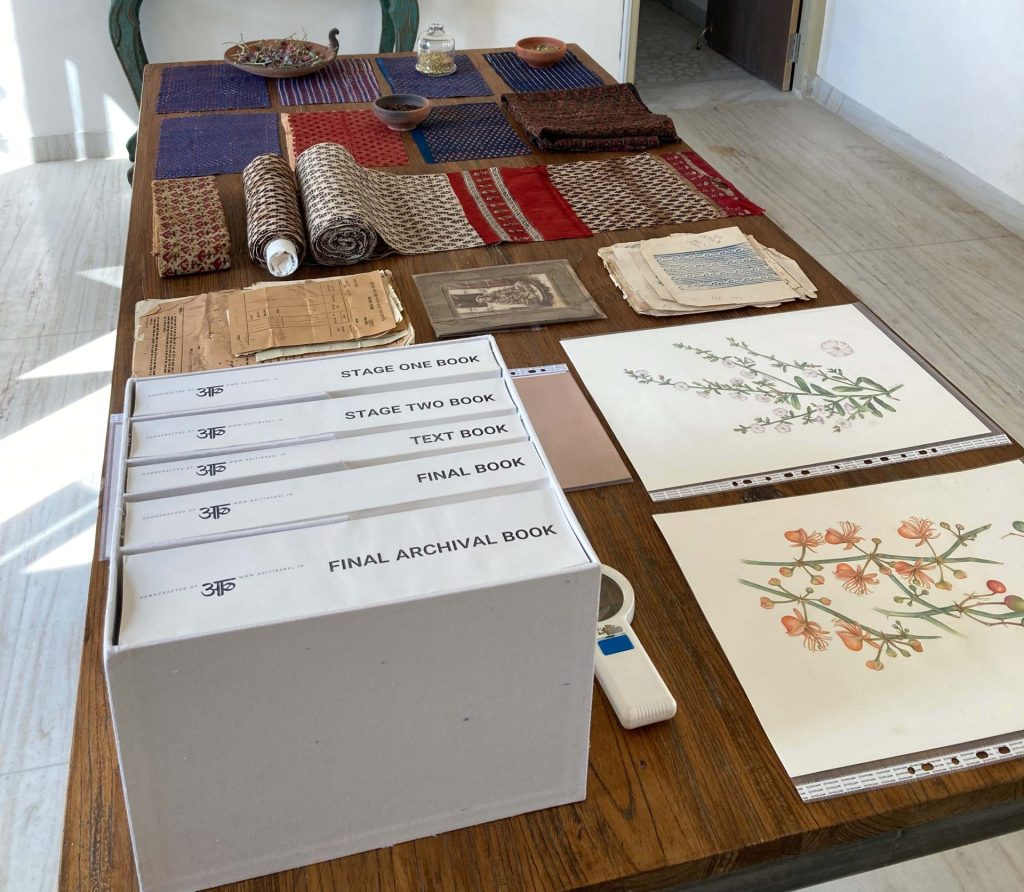
Sample of the book binding and jacket made by Aditi Babel
The exhibition has given the project greater visibility and confidence among its supporters. What began as research into Marwar has prompted Meena to imagine similar documentation and revival initiatives in Kutch, Madhya Pradesh and Sanganer, where other traditions have been overshadowed by mass production and the popularity of a limited range of commercial products. He is also interested in historical prints in Sudan, where some of the knowledge may still survive with a few practitioners.
The larger ambition is to create a sustained institutional framework for traditional printing. Meena’s concern is not simply that old designs should be reproduced, but that the knowledge behind them should remain alive and accessible. This includes the cultivation of dye plants, the availability of appropriate wood, the training of block carvers, the recovery of complex printing recipes, responsible water management, the participation of women and the creation of viable work for artisan families.
The Marwar Block Print Project is thus moving beyond the recovery of a forgotten textile repertoire. It is documenting a network of relationships between geography, ecology, community, trade and craft. Its success will ultimately depend on whether the knowledge recovered through research can return to the people who made it, support the next generation of artisans and find meaningful uses in the present.
For Meena, the future of block printing lies not in preserving it as a finished object behind glass, but in ensuring that the printers and block carvers themselves can continue to practise, experiment and pass on what they know. The exhibition at Kaner offered a glimpse of that possibility: a textile tradition brought back into the landscape and, importantly, back into the hands of its makers.
